Wizardry - How it was Born
Chains of Creativity

 Introduction
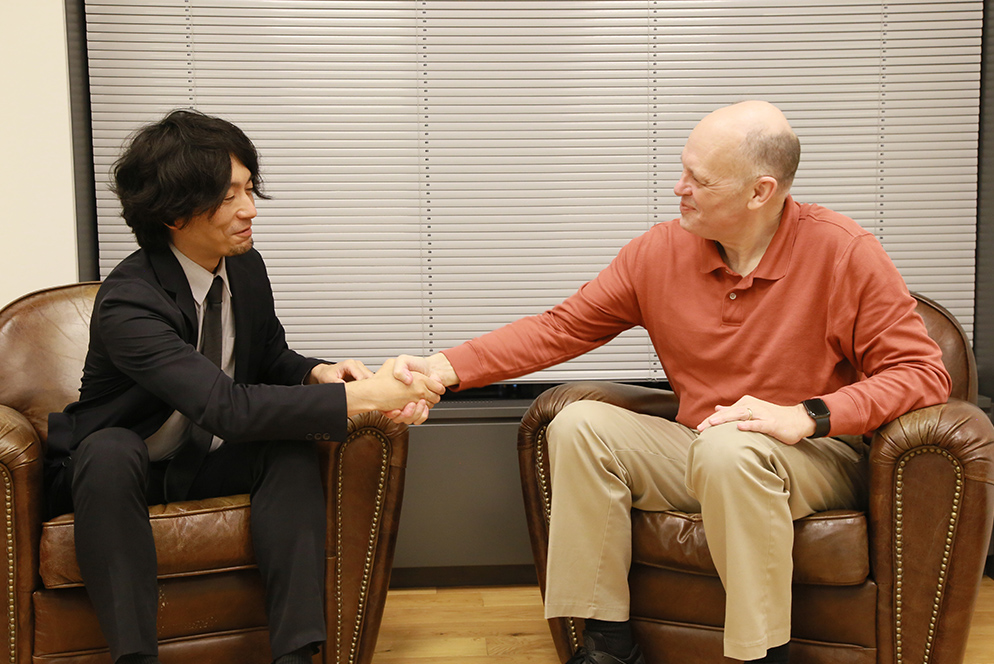
After 13 years since the last release in the Wizardry series, Drecom is in the final stages of developing the new series dungeon RPG title "Wizardry Variants Daphne" to be released soon. Marking this awaited return of the legendary series, a conversation was held between Keisuke KANAYAMA, the director of Wizardry Variants Daphne, and Robert WOODHEAD, the original creator of the Wizardry series. Robert reveals the hidden episodes of the Wizardry series on how it was born, how it succeeded, and shared on the expectations he has over this new challenge.
BiographyRobert Woodhead
Game designer and software developer. Along with the late Andrew GREENBERG, he created the Wizardry series, one of the influential origins of computer RPG games. Series fans refer to him respectively as the “Mad Overlord” as an acknowledgement of a character, Trebor the Mad Overlord, that appeared in Wizardry1, which was Robert’s name spelled backwards. Currently he operates AnimEigo, a company that licenses and distributes Japanese anime and movies to the American market.
Keisuke Kanayama
Joined Drecom in 2011, has been involved in the gaming industry for nearly 20 years. As a game planner/director, he is known for various Japanese-taste action titles and also “AKIBA’s TRIP” while working for ACQUIRE Corp. In Drecom, He is known for directing various smartphone titles such as “Derby Stallion Masters”. He is the producer/director for “Wizardry Variants Daphne”.
Was interested in Japan from his early ages ‐ Robert’s familiarity with Japan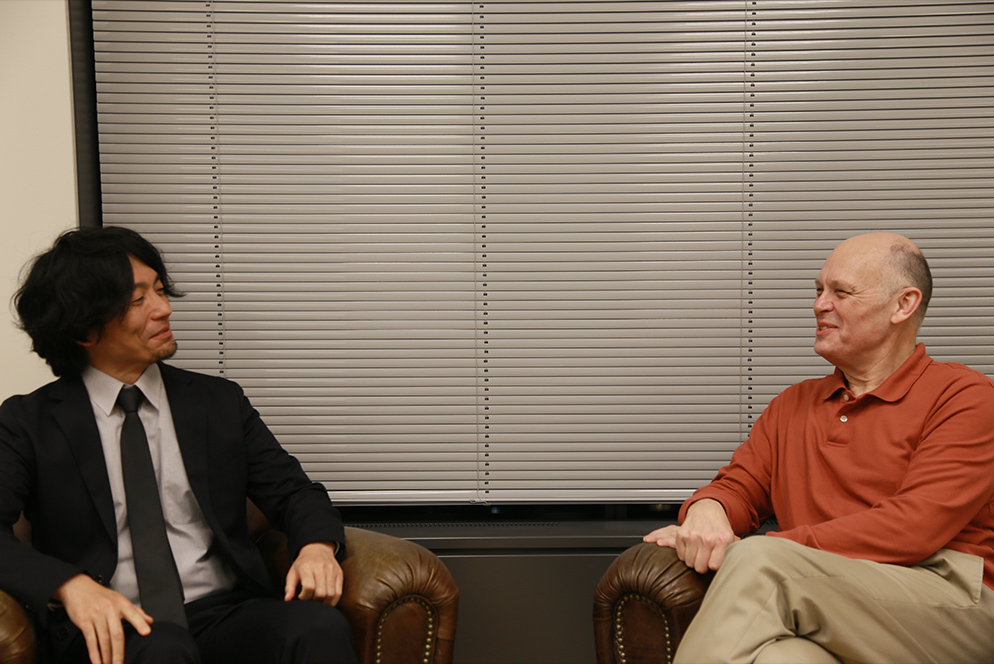
Keisuke:Thank you for coming to Japan, all the way from the US. It is an honor to finally meet the legend of gaming history.
Robert:Thank you too for inviting me.
Japan is a very familiar country to me. After moving on from the gaming industry to running an Anime and movie releasing company, I’ve been visiting Japan at least once a year. However, in the last few years with the restrictions with the CORVID I haven’t been able to take a visit so I’m happy that I’m finally here.
Keisuke:Speaking of Japan, I have noticed there are many references to Japan in the Wizardry series. We all remember how Ninjas and Masamune were iconically powerful. I believe these little references of Japan took part in Wizardry, a memorable title series for Japanese players. Could you extrapolate a bit more on your relationship with Japan?
Robert:I wasn’t the first to Implement aspects of Japan in a game, but I have been fond of Japan since before making the game. My interest in Japan really started in college, and was in large part sparked by the TV mini-series Shogun (starring Toshiro MIFUNE and Yoko SHIMADA). This series was really popular in the US, so adding Japanese stuff to Wizardry seemed like a cool thing to do. When Wizardry was released, I had many opportunities of being invited to Japan, and that is how I met my wife who did the interpretation during my visit. Even to this day we work together making subtitles and running my current company.
Keisuke:Very interesting. Sounds something that I can relate to.
For over 40 years, and the new born Daphne ‐ Creators linking the chainKeisuke:As a game designer, my project initially had in mind creating a 3D dungeon crawler on mobile. But after a series of fortunate events and opportunities, my project was allowed to make a new title for the Wizardry series. It’s been 40 years since you made the first Wizardry, but how do you feel about the new addition to the series?
Robert:I am very happy about it.
Regarding creative works, I often make an analogy that history of creativity is like a chain. Creators are influenced by other existing works, and reflect their inspiration on to their work. Then someone else is influenced by that work, making a chain. It is very fortunate for me to witness that what I created long ago is being a positive influence and being created into a new work by others. It has been a very long time since I was involved in the Wizardry franchise, but I believe every developer team that created the sequel of Wizardry after me all had their unique beliefs and ideas in the work. Having that said, I wish you too that you create the Wizardry that feels right to you. I am looking forward to seeing the new Wizardry.
Keisuke:Thank you for such an encouraging comment! I do remember in your previous supporting message for Daphne, you mentioned an example of a chain. It was as if I caught a glimpse of how it was like during the early ages of gaming. And yes, I hope too that I can be part of that chain and meet everyone’s expectations!
Today, I wanted to hear some stories of Wizardry from the original creator on how it was born and got connected to the next chain.
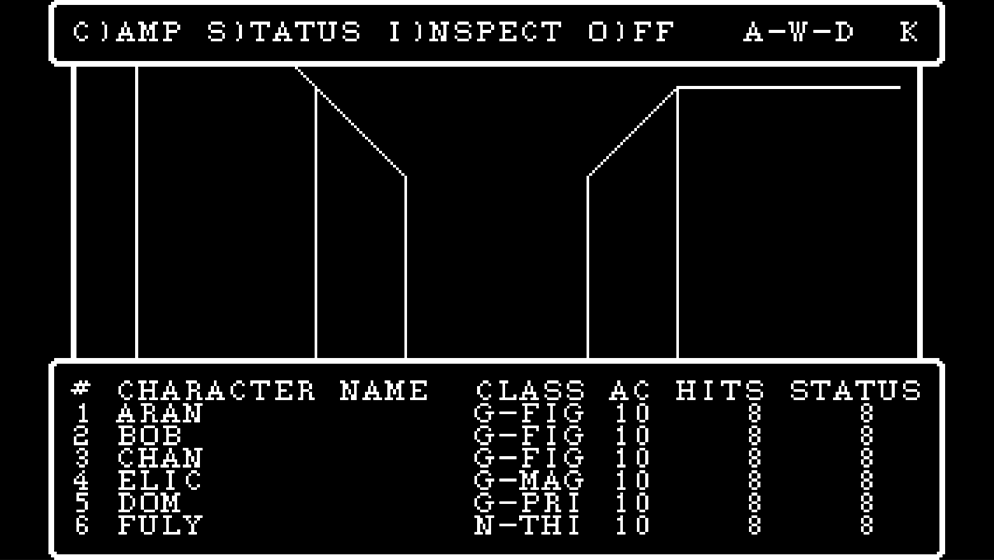
There is something that I can do - How Wizardry was bornRobert:The first Wizardry was made back in the 1970’s when I was a college student. It was also the time when the very early form of the network was made. Back then, it was running a system called PLATO. It was using a specific plasma monitor that was made just for PLATO and running many innovative programs at the time. Many of us were into using PLATO. Few hundred of us would connect to the network and play online games together. Looking back now, many of the modern games are using aspects that were born within PLATO, but sadly not many know this. Within those games that were born within PLATO, there were several dungeon crawler games that became the inspiration for Wizardry. Within the trend of many games becoming the origin of a new genre, I thought to myself “hey, there is something I can do with this”.
My idea was that, back then people were just starting to use low performance budget personal computers. I wanted to make a game like the PLATO games I loved that can run on those computers. That is how my game development started off.
Keisuke:It is widely known that Wizardry was made by you and Andrew Greenberg. Were you already friends with each other at the time?
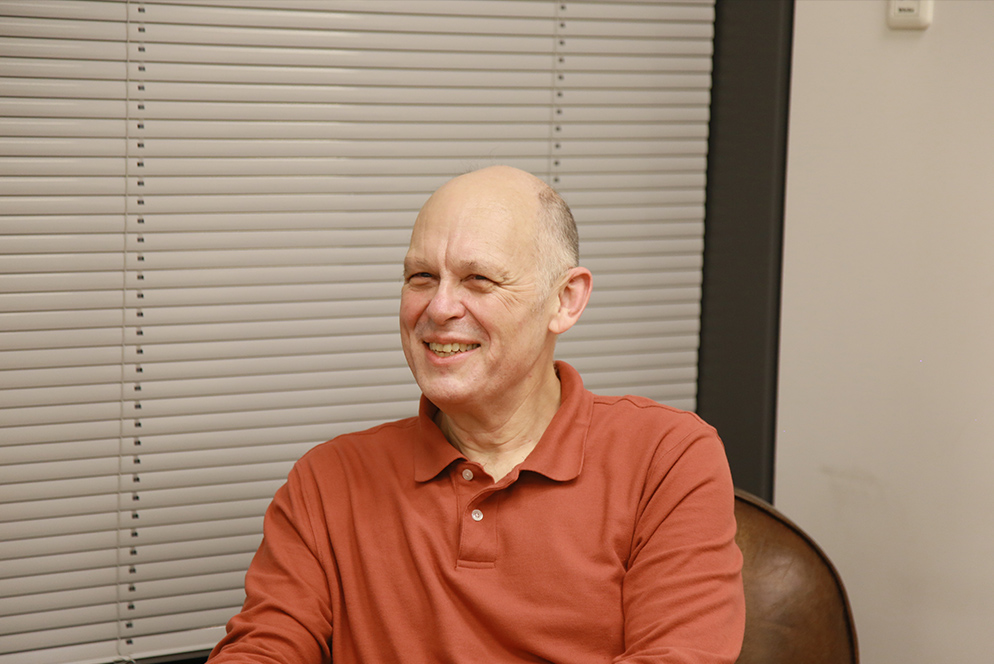
Robert:Actually we weren’t exactly friends yet at the time. We certainly knew each other via PLATO. Maybe we would play the same game at times. But one day just when I was making a dungeon crawler game for the low performance computers, I also learned that Andy also was making a game with a similar concept.
It was the time when I was thrown out of college for playing games too much. I had the time, so I showed him what I was working on, and he showed me his.
Then we realized that what he was making complemented what I was doing, so we decided to join forces.
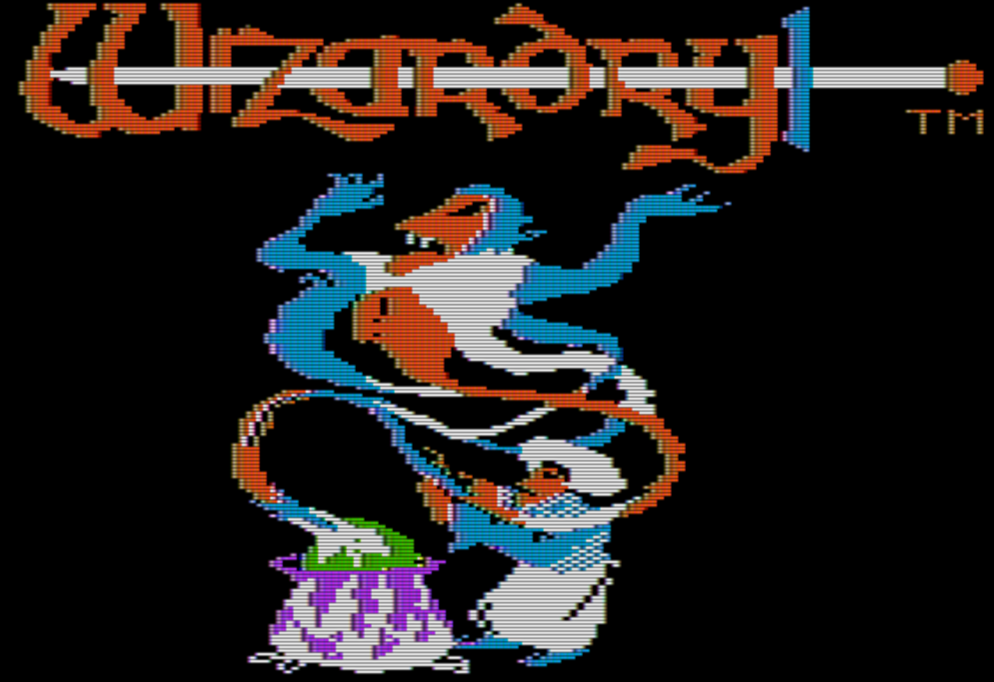
The game I was making was called “Paladin”, but Andy and his friends had a much better name, “Wizardry”. When I first heard that name, it really hit the spot.
Keisuke:Were you guys living close by?
Robert:When we went to college, we were in Ithaca. A town in New York state with a population of around 20,000. Ithaca was known as a university town for Cornell University. But besides that, Ithaca is rather centrally isolated within New York state, taking a couple of hours to drive to any adjacent town. When you hear the name New York, you may imagine an urban city like Manhattan, but actually there are many others.
While I was thrown out of college, I went back to my hometown, but still it was like a three hour drive to Ithaca, so like every weekend I would drive there and make the game with Andy.
Keisuke:So that is how you two started making the game. What was game making like back then?
Robert:Back then we made everything from scratch. Few of our friends helped us here and there and gave us comments on the game, but besides that it was the time you made games out of nothing.
Keisuke:What were the roles of you and Andy?
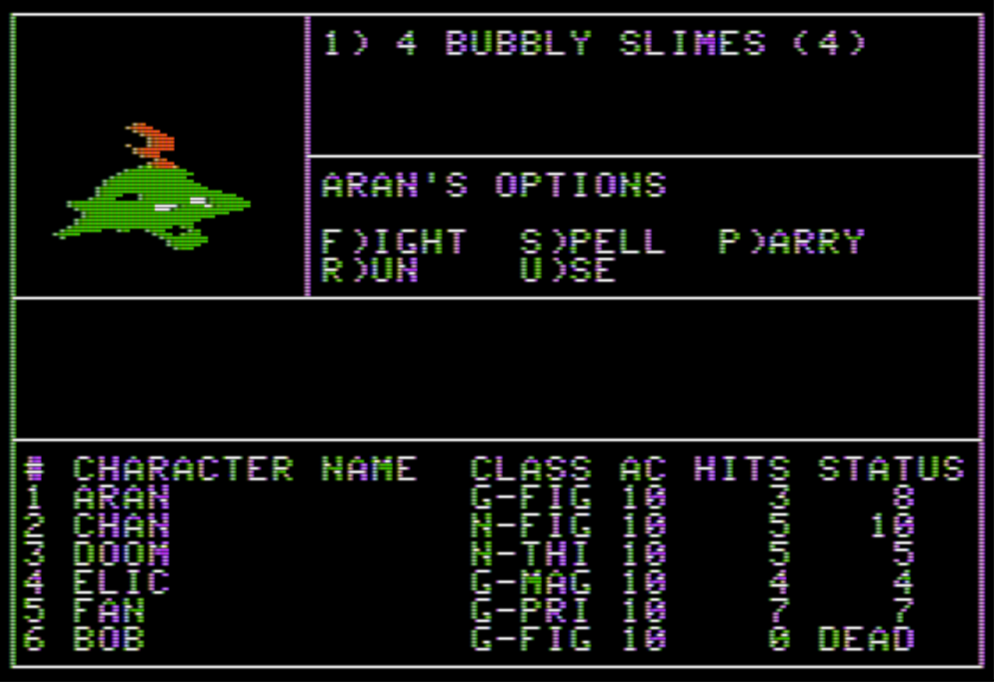
Robert: Andy did the very first story and detailed designs. I did the programming. The logo design, the dragon design, and the art that appears within the manual was done by Andy’s friend. That friend is currently a famous artist. I did the design for the creatures that appear within the game, but that is why it's bad, I wasn’t an artist.
There weren't any painting programs that allowed you to make designs and color within the game, so I had to make the art with a keyboard, one pixel at a time. Even just one art took a long time, so we could not afford to make too much detail. Now we have aiding programs that can create assets easily by giving a few parameters to an algorithm. Although I believe people now have new things they need to work on so there are other things they need to work on.
 Shouting out loud in a room ‐ Creating the spells
Keisuke:One memorable aspect of Wizardry is the iconic spells. How exactly were those spells made?
Robert:It has been a long time, so I may have forgotten some of the details, but that was something Andy and his friends came up with. It was based on Welsh language, so one can say those spells are fake Welsh spells. But we did want to have some grammar in it, like Halito, Mahalito and Lahalito. But not all aspects made it into the game since due to capacity limitations at the time. Some of it was altered by me due to programming reasons.
Originally we had a concept of making a proper syntax of the spells by combining them in a certain way to cast spells. However, we couldn't find a good way to program that in, so it became what it is like now, having a word per spell.
Keisuke:In Japan, there is a derivative setting called “True Words” made by Makoto TAKEUCHI. The concept was that each spell, for example HALITO, is a combination of those True Words of HA (activate), LI (fire), and TO (wind/storm). By adding more words, it allows to further alter an existing spell like MA (widen/farther) and LA (larger).
Robert:Well that is a very interesting idea!
Back then we didn’t put that much thought as that into the spells. I think he spent more time with the lore of the spells than we did. It sounds like trying to figure out the shape by looking at a cloud. That is such a fantastic interpretation, it makes me want to say “So someone finally figured out what it means.”. We would have never imagined adding that deep of a lore to it.
Keisuke:We studied Wizardry True Words in our project too. There are many Wizardry fans throughout the world, and especially the fans in Japan have a special feeling towards the series as we feel we had some input in the series through some of the Gaiden titles that were made in Japan. This is a blessing, but also a curse that players in Japan will have higher expectations for the new sequel. One prime example is that Daphne will be introducing the long awaited 1-5 spells that none of the previous series had. Being a new set of spell tiers, we had to come up with an original name while maintaining the original feeling. Even now I’m contemplating on if it was the correct decision or not.
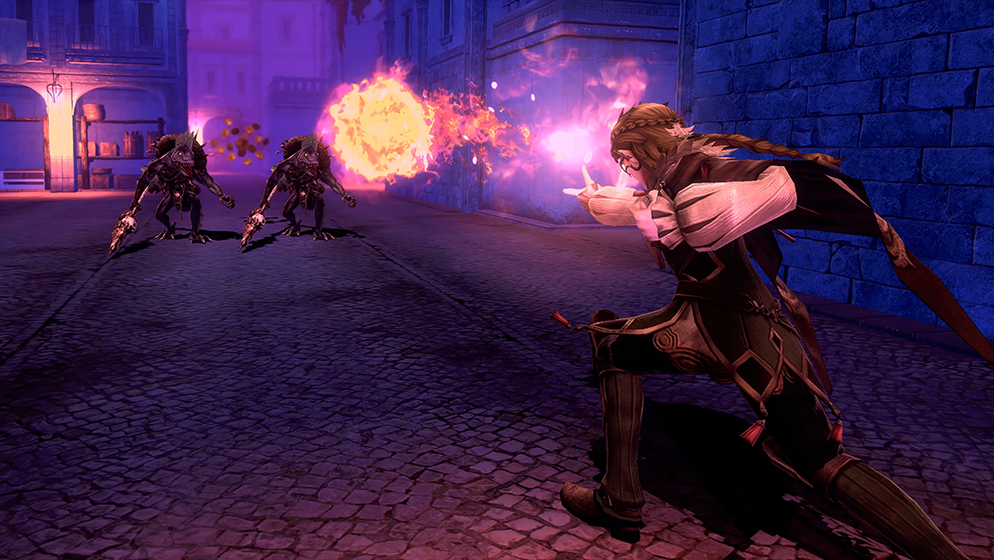
Robert:The True Word system I thought was a great idea, so I don’t mind you making reference to it. But what I think is most important with spells is that if it sounds cool when you actually say it yourself. You should try shouting those spells in a room where no one is around. If it felt good, then that is a good spell. Ultimately it is a matter of what feels right. Guess what, we too actually shouted out those spells to decide what sounds cool.
Keisuke:Really? Fortunately the current project has shifted towards a remote working environment so it would be easier for me to test out the spells than back in the days when we worked at the office.
Three reasons why Wizardry succeeded ‐ Relationship of game development and businessKeisuke:Hearing your story, the first Wizardry sounds like it was made with many intuitions and ideas from scratch, but how did the market see the title at the time?
Robert: Initially we were not expecting to release the game to sell it. We made the game trusting our feelings, and wanted people to play with it. Initially we made a beta version of it. Couple of our friends bought it, so next we tried to present it at an exhibition. We hand-copied 100 copies onto a floppy disk, hoping it would be great if this batch sold over a few days of the exhibition. But to our surprise, we sold it all on the first day. Each copy was 40 dollars, which was not cheap. That was the first time we realized “maybe this is something that sells”. Andy didn’t have much expectation initially, so he said he would be happy if this helped him pay off his student loan. But as it turned out, after the full release Andy was able to pay off his loan in a month.
The first few thousands of copies were hand made by us, copying off one by one onto a floppy through a couple of steps. Then we got a machine that can make full copies with one step. Then we installed a system that will automatically swap the disks. Back then we couldn’t send to some company to mass produce it, so we had to make it ourselves.
Keisuke:Wow, each copy was personally made?!
Speaking of that time, I believe there were many other games that were born at the time. What do you think helped Wizardry to succeed within that competition?
Robert: Thinking back, I think there were three reasons for it. First off was of course it was a good game. Nobody wants to buy a bad game. It was a good product that stood out from the others.
In the 70’s , there were many other games, but at the time most were individually made as an extended hobby. However, we were a team even if it was just us two. There weren't any development teams at the time. We were probably one of the first game development teams in history. Because it was a team effort, we were able to make a good product that made it look distinct from others.
Second reason was that the title “Wizardry” was great. Andy and his friends thought of the name and I immediately agreed it was very attention grabbing. Don’t underestimate what a title name can do.
The last major reason was, it was sold in a box. That was Sirotech’s idea. Other games back then were sold in a ziplock bag with a simple paper manual. But we sold it in a box and it stood out on the store display. It made it distinct from the other products. But I think half of the reason Sirotech suggested to sell in a box was since the manual was so too thick to fit in a bag. Wizardry was probably one of the first games to be sold in a box.
Keisuke:That must have been a very historical feat. I see that the great game clicked right in with a good business decision.
Robert: Just hearing these stories may sound like how these ideas were successful and genius. But there is some survivorship bias with that impression, since only those who succeed manage to leave a record. I am sure there were others with brilliant ideas that just didn’t make it due to lack of opportunity.
We too were not confident with the idea at the time. The idea sounded reasonable, and when we tried it, it worked. We weren’t sure what the outcome would be, so we had to try it out.
 Challenge to be acknowledged ‐ For the new title
Keisuke:Seeing your biography, it seems you have made many other challenges besides game designing, creating the foundation of a new industry.
Robert: Yes, there were many challenges, and each was not easy. When I founded AnimEigo for anime English subtitles and releasing as VHS, none of the companies in Japan were interested in my story. Back then, nobody thought it would be a viable business to add English subtitles to Japanese anime.
At that time, Toshio OKADA, the CEO of GAINAX, who I had met during my stay in Japan, said something that I still remember to this day. He told me “Everyone doesn’t want to be the first penguin to jump in, they want to be the second”. After the first collaboration with Fujisankei with MADOX-01, and with ARTMIC with Riding Bean and Bubblegum Crisis, various other anime companies in Japan agreed to collaborate with their anime. A single success leads to a chain of more successes.
It is always scary to take the first step. A normal company will also need to consider the risk of a failure. Fortunately for us, we started our work out of fun which eventually turned into a serious work, with so much effort invested into it already it was easier for us to convince ourselves we should simply try it out.
Wizardry that me and Andy made, and anime English subtitling that me and Roe ADAMS did, we never were confident that it would work, but we had to try it. As a result, we were the first ones to jump in, and came out as the first to accomplish it as a feat.
Keisuke:So can you say having friends that you can work together on a seemingly joke-like idea is important for success?
Robert: That might be true.
I don’t seclude myself, but I’m more of a type who has few but close friends. Andy and Roe were one of them.
Keisuke:How exactly did you become friends with them?
Robert: The strongest connection with them was my hobby of reading. I’m basically a bookworm that becomes anxious when not reading a book. Andy too did a lot of reading as he had so many books at his home, almost like a library.
We still read many books each week. Back then, we would send each other boxes full of recommended books to each other.
Roe too is a reader. He had so much knowledge over trivial things. Because of that mutual interest, we can talk with each other forever over the books we read, simple jokes, to even philosophical questions. I believe that marks our strong ties.
Keisuke:One might have assumed games or anime, but I'm a little surprised it was reading. Did you like to read as a child?
Robert:I grew up in a family of two brothers and sisters, me being the eldest. My mother was always busy caring for my siblings. My mother noticed that as long as I had a book to read, I would not cause trouble while she took care of the others. So, she bought me a lot of books to read. Later she did regret allowing me to read at the dinner table though. Thanks to that, I was able to show interest in various things. I believe Andy and Roe had a similar range of interest as me. Anime, games, but also books, magazines, and even american comics. Having a wide range of interests might be helpful in game designing.
Keisuke:That sounds wonderful. Having a close friend with whom you can share various things in life is hard to come by.
Robert:I always liked entertaining people. I used to want to become a stand up comedian when I grew up. Unfortunately I realized comedians required a certain talent to do so, and I didn’t have that. But that did not stop me from trying it out during events like at the wedding.
Keisuke:What kind of wedding did you have?
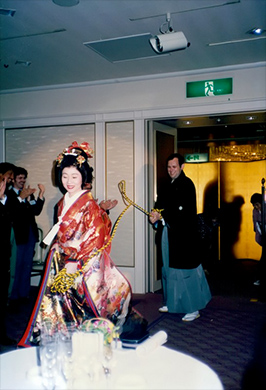
Robert: It was a so-called Interactive Wedding made with a game design perspective.
A normal wedding you would have everything planned out ahead. Our wedding, we had the attendees vote on what we would do.
The base of the wedding we did was a Japanese style wedding, but for example we held a vote on how the bride and the groom entered. First option was to enter like a traditional wedding where the groom enters first with the bride behind him. Second option was to reflect modern ways, and have the bride and the groom walk beside each other. The final option was “reality”, and the bride would come in first followed by her man. We had funny things prepared for each possible choice, but as a game designer, I knew people would choose the third one. So I was tied up with a rope and Natsumi dragged me to the altar to be married.
We also held a vote on how the wedding cake would be cut:
A. Use a saw
B. Use a katana
C. Use a karate chop
D. All of above
As expected, D. was voted most, so the cake was cut with a saw, and katana, and finally karate chopped.
In the end the cake was a mess, but it was very delicious.
Keisuke:I’m sure everyone who attended the wedding still remembers that.
Robert:Including Toshio, who was the guest of honor, a lot of my friends in Japan came to my wedding. Everyone said it was a unique wedding that only I would do.
Keisuke: I see that there are always some ideas and tricks in your mind to try out. The courage to challenge, the wisdom, and a little trickster heart.
Wizardry is known for having little tricks and humor throughout the game. I am starting to understand where that came from after talking to you.
I personally feel that most worldwide hit works don't neglect including little jokes in their work. I think I now understand why Wizardry is loved by fans around the world.
Robert:I might be repeating myself, but that alone might not be the requirement of success. We were also fortunate with the opportunity, and we are just looking back now to realize what worked. But would have never happened if we didn’t try it in the first place.
Keisuke: Indeed with a challenge, there will be no result to look back later. Daphne will be using the Wizardry IP so it is not something totally from the ground-up. But for us it is still a new challenge as there isn’t a 3D dungeon game that succeeded on mobile. Also we will be implementing challenging ideas within the game content too.
Having played our game in development, what do you think of it? Honest opinion.
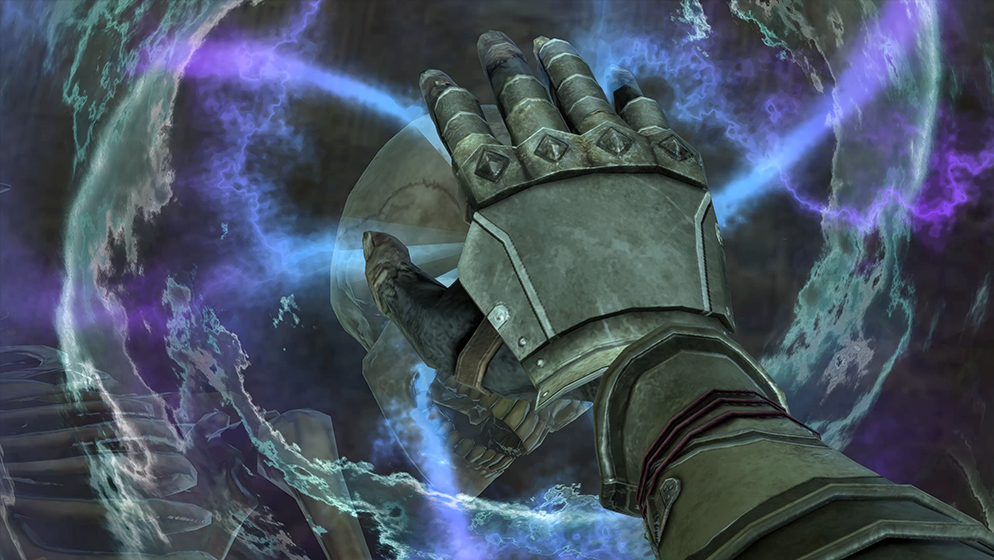
Robert:I like the way it captures many of the aspects of the original game, in particular the anxiety of “should I take a risk and keep exploring, or play it safe and head back to town?” At the same time, I enjoyed the new game mechanics that add new layers of depth to the game. I ended up making pages of notes that I sent to Drecom – in the old days, when someone found a problem with Wizardry, I was usually the one who had to fix it; this time I got to do the complaining!
Keisuke: Originally, we were only expecting to just get some brief feedback, but it turned out to be a very detailed report with many great suggestions! From specific suggestions made from a game designer's perspective to bug reports as a player. We will be incorporating Robert's feedback into the game. Of course, we are working to fix those bugs as well, ha ha ha. We hope you will play the game again.
I thank you today for coming and sharing such an interesting story.